Law firm software Kenya
Practice software for Kenyan advocates.
Matters, client account records, and shilling billing, with Kenyan case law and legislation searchable inside the same system. The practice management Kenyan firms already know, with an AI research engine the incumbents do not have.
KES
Billing and invoicing in shillings
Cited
Kenyan case law and statutes
Offline
Desktop app that syncs on reconnect
8
Jurisdictions for cross-border work
For Kenyan practice
What a Kenyan firm runs on.
Kenya has the most digitally mature legal market in East Africa. Firms here adopted practice management early, which means the question is no longer whether to use software. It is whether the software can do the legal work as well as the administration.
Kenyan legal research
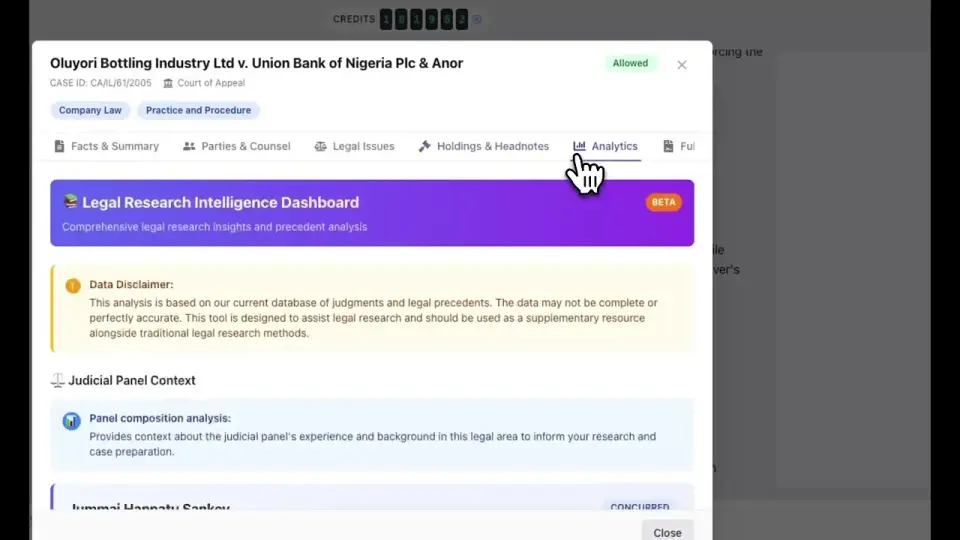
Kenyan judgments and legislation searched in plain language, with every authority linked so you can open it.
Client account records
Client money held and reported separately from office money, reconciled continuously, with an exportable trail.
Matters and court diary
Hearings, filing dates, and limitation periods tracked per matter, with reminders that escalate when nothing moves.
Drafting in Word
Pleadings and agreements drafted with native track changes and citations checked as you write. See the add-in.
In depth
The upgrade path from a legacy system.
The gap
Good administration, no legal engine.
The established Kenyan platforms handle matters and billing competently, and firms have used them for well over a decade. What they were never built to do is read the law. Research still happens in a browser, drafting still happens in an unconnected copy of Word, and neither is captured against the matter. See the comparison with a legacy pan-African platform.
Regional work
Nairobi practices rarely stop at the border.
Nairobi is the regional hub for East African commercial work, and the documents reflect it: English governing law on the financing, a South African counterparty, a Nigerian subsidiary. All eight jurisdictions sit in one query interface, with the governing law stated on every answer. See legal software in Africa.
FAQ
Questions, addressed.
What is the best law firm software in Kenya?
Kenyan firms have had capable practice management for over a decade, so the differentiator now is whether the system also does legal work. ModulawAI combines matter management, client account records, and shilling billing with an AI research engine covering Kenyan case law and statutes, plus drafting inside Microsoft Word.
Does it cover Kenyan case law?
Yes. Kenyan judgments and legislation are part of the research corpus, with citations linked to their sources so each authority can be opened and verified.
Can we bill in Kenyan shillings?
Yes. Invoicing is multi-currency with jurisdiction-aware tax, so shilling billing for local clients and other currencies for regional or international work sit on the same matter list.
How does it handle client account records?
Client money is held and reported separately from office money and reconciled continuously, with every movement date-stamped and exportable. Compliance with the Advocates Act and the accounts rules made under it remains the firm’s responsibility.
Can we migrate from our current system?
Yes. Matters, clients, and contacts import from CSV and Excel exports as part of onboarding.
Fees are regulated here
Billing in Kenya is not a pricing decision.
This is the point most practice management software, built for markets where firms set their own rates, gets wrong about Kenya. Under section 44 of the Advocates Act, the Chief Justice makes orders governing what advocates may charge for contentious and non-contentious work. The Advocates (Remuneration) Order made under it does not suggest fees. It sets a floor.
An advocate may not agree to or accept remuneration below what the Order provides. Charging under the scale is undercutting, which is an offence under section 36 of the Advocates Act and is separately prohibited by the Law Society of Kenya Code of Standards of Professional Practice and Ethical Conduct. The Order was substantially amended in 2014, so the scale a firm is working from needs to be the current one.
Two consequences follow for any system a Kenyan firm runs on. A discount field that lets a fee earner drop a bill to win a client is a compliance hazard, not a feature. And because costs can go to taxation, the fee note has to carry its own working: what was done, on what date, by whom, and on what basis the amount was arrived at. A bill that cannot show its reasoning is a bill that gets taxed down.
Moving off a legacy system
A sequence that does not cost you a quarter.
Kenyan firms adopted practice management early, so most moves here are replacements rather than first installs. That is easier in one way and harder in another: the data is already structured, but the firm has a decade of habits built around it.
- Export and freeze. Take clients, matters and documents out of the incumbent as a read-only archive before you change anything.
- Bring across open matters only. Closed files stay in the archive until a live reason pulls one forward. Firms that try to migrate everything lose weeks to data nobody opens.
- Load the fee scales before the first bill. The Order’s basis needs to be in the system from the start, so bills are computed against it rather than corrected afterwards.
- Run one practice group for a full matter cycle. Conveyancing or debt recovery works well, because the volume is steady and a complete cycle finishes quickly enough to learn from.
- Move client account records last, at a period end. Reconcile in the old system, close the period, open the new one. Never split a reconciliation across two systems.
What this does not do. It does not compute a taxable bill of costs for you, decide whether a fee complies with the Order, or file at the registry. Compliance with the Advocates Act and the Law Society’s code remains the advocate’s. What it contributes is Kenyan case law and legislation searchable beside the matter, a record complete enough to justify a fee note, and a court diary that escalates rather than expires.
Try it on a Kenyan authority.
Book a demo and ask it a question you have already argued.